The ad comes before the game: testing an idea in its first three seconds
05.11.2026 · 3 min read
- #ads
- #publisher tests
- #game development
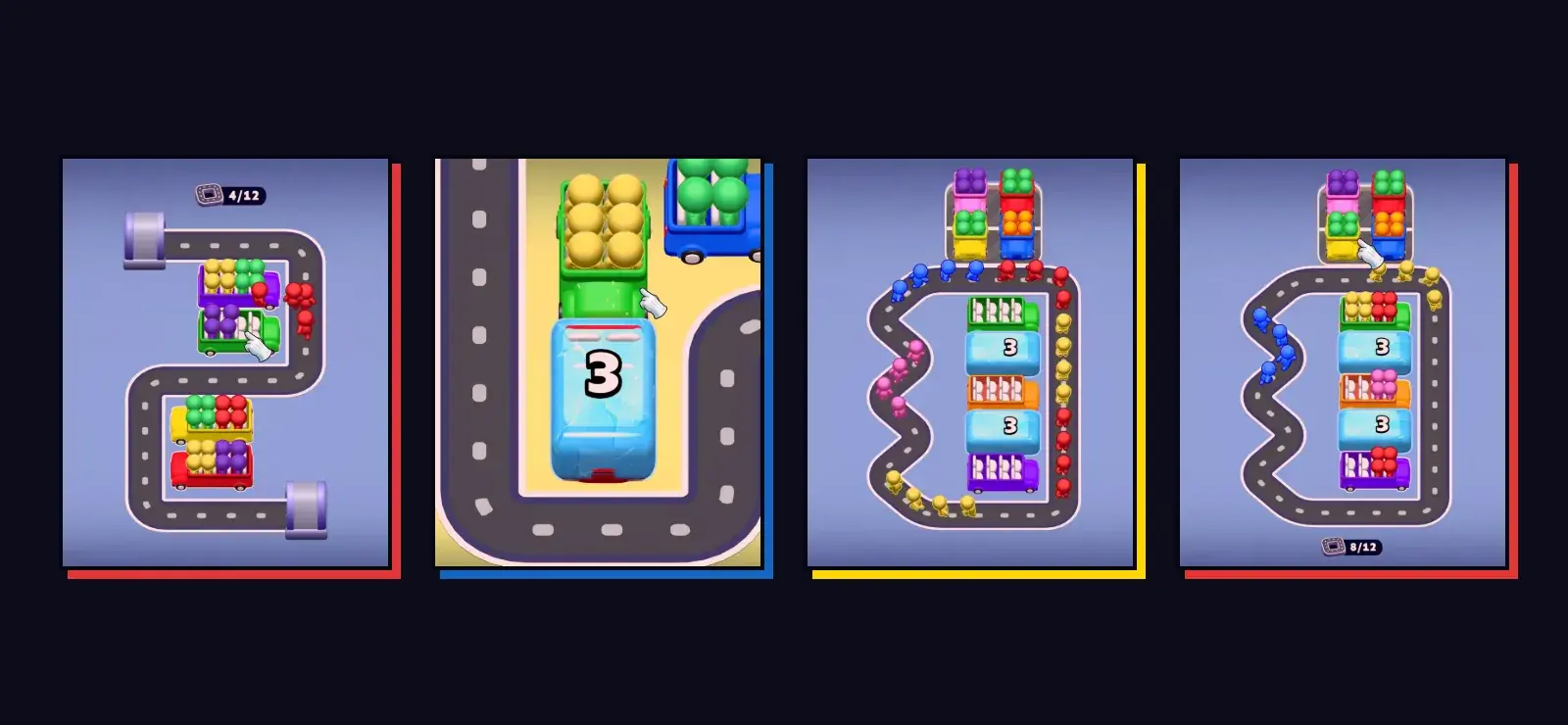
In my first years of making games, the order looked obvious to me: you build the game, and when it's finished you make its ad. Once I started working at studios, I saw that the order is often the other way around. The ad video is a game's first serious test.
The reason is simple. Ads are the most common way a mobile game reaches players. If the video can't stop someone scrolling within a few seconds, it hardly matters how good the game is; getting that player becomes very expensive. So before an idea is built for months, its video is made and shown to real people.
One game, many videos
A game doesn't get a single video. Several versions of the same game, with different openings, visuals and gameplay, go live at the same time, and the numbers decide which one brings players in more cheaply.
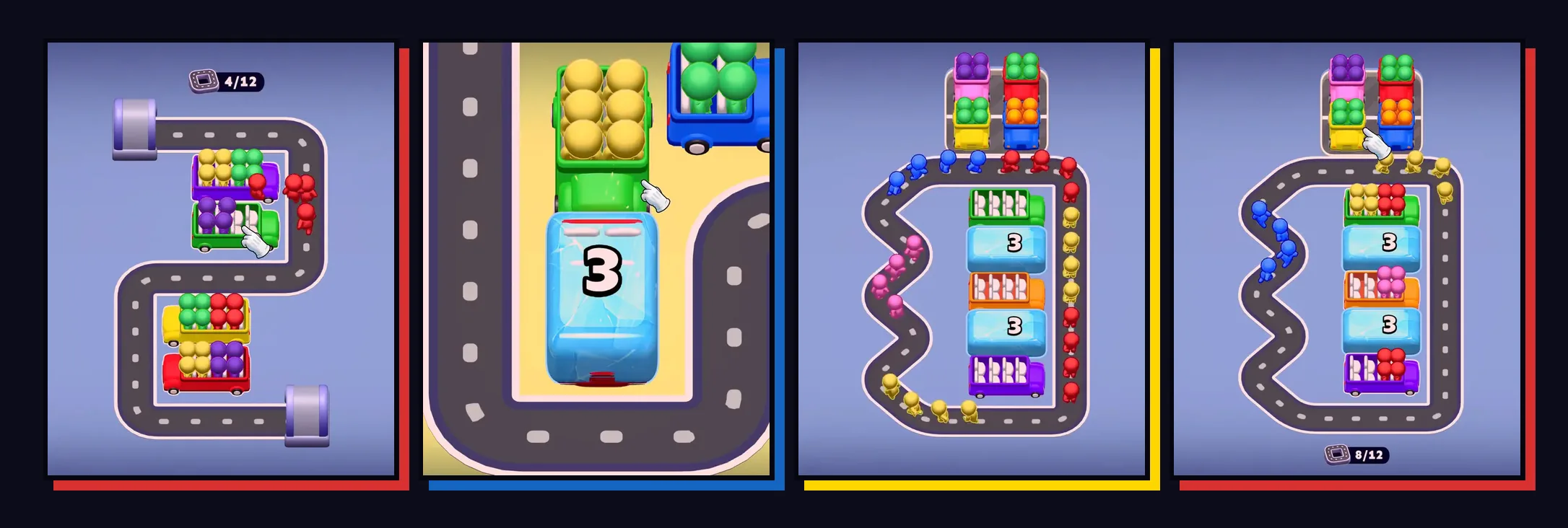
What I usually change between videos:
- The opening: The first second or two. Sometimes it starts straight on gameplay, sometimes on a crowded scene, sometimes on a mistake.
- The visuals: Background, colors, camera angle. The same game can look completely different from far away or up close, or on another surface.
- The gameplay: Does the video show a winning moment or a losing one? A losing moment is often used so the viewer thinks "I'd have done that better".
- The pace: How much happens in the first five seconds.
Sometimes the game itself changes
Sometimes the difference between videos isn't just the opening but the whole concept of the game. For Fear Ride, the zombie-themed game we built at Talus Studio, six separate concepts were made: a shooter scene in a dark corridor, a firefight in a town, driving a truck through zombies, running over a horde with a vehicle, a fight in a building seen from above, and a defense with a machine gun.
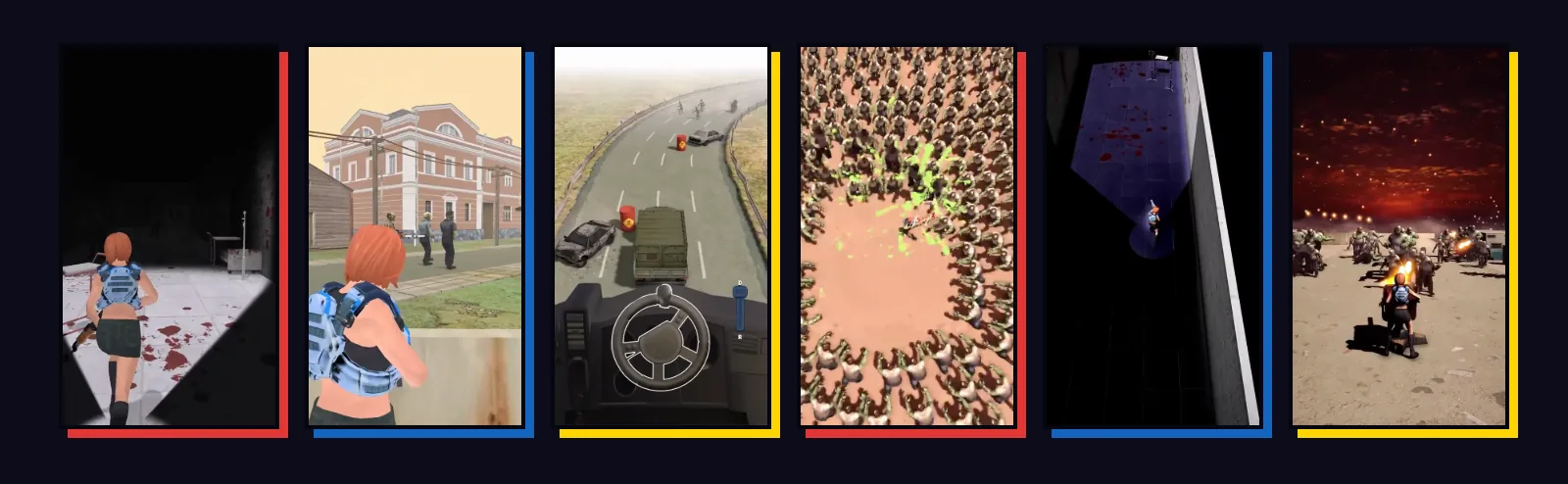
This is the cheapest way to try an idea. Building six different games takes months; making six different videos takes a few days.
Shooting the video inside the game
The faster videos can be made, the more can be tested. That's why I build editor tools in my Unity projects for producing ad videos and store screenshots. In Evo Squad I took it a step further: a bot plays the game and Unity Recorder records it. I don't have to play the scene by hand for a new video.
What the numbers say
Once a video is live, the first number to look at is CPI, what one player costs. A low CPI shows the video catches attention. But it isn't enough on its own: if the players who came from that video don't stay in the game, the video is promising something the game can't give.
A good video honestly shows the best moment of the game. The fake games we see in ads are the opposite: a great video and no game. That's partly why Evo Squad is an answer to those ads.
The videos made for games like Car Camouflage, Pop Crowd and Fear Ride sit side by side on their project pages under My work.