After more than 200 prototypes: why most game ideas don't work
05.11.2026 · 3 min read
- #game development
- #publisher tests
- #prototyping
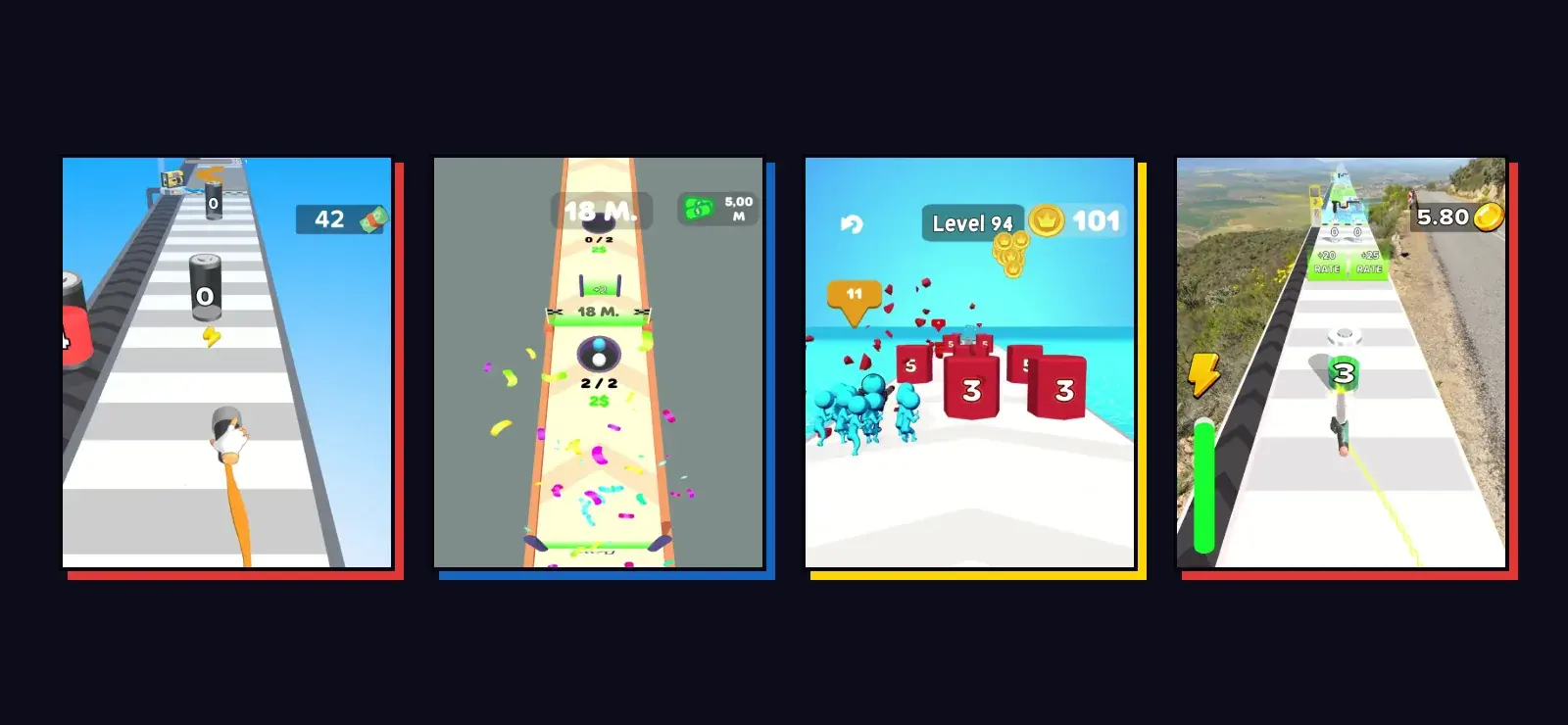
Since 2019 I've built more than 200 games and prototypes. A small share of them are live in the stores; most were shelved after a test of a few days or a few weeks.
From the outside that number can look like waste. But especially in hypercasual and hybrid-casual, this is how the work goes: ideas are tested small and fast, the ones that don't work are dropped, and the ones that do are grown. While working with publishers such as Rollic, Homa and Lion Studios at studios in Istanbul, I was inside this loop every week.
How an idea gets cut
When a prototype goes to a publisher, the first thing they look at isn't the game itself but its ad. A few short videos are shown to real people and three things are measured:
- What a player costs (CPI): Can the video stop someone scrolling past?
- Do players come back (retention): Does someone who downloaded it open it again the next day?
- How long they play: Is the game still interesting after the first minute?
If even one of these is bad, the idea usually ends there. The reasons I've seen ideas cut mostly come down to one of these three numbers.
What failed ideas have in common
It can't be understood in three seconds. A mechanic that sounds great in my head can turn into "what is this?" in a video. If the viewer doesn't get what the game is in the first few seconds, they scroll on. This is the reason I've seen most often.
The game doesn't deliver what the ad promises. The video is good, people download it, but they don't find what they expected when the game opens. Good CPI, bad retention. It's a small version of the fake ads that made me build Evo Squad.
The first minute is fun, then it's empty. The core mechanic is enjoyable, but there's no sense of progress: nothing new opens up, the goal doesn't grow. Players play and drop it.
The idea is too familiar. If the store already has ten games like it, at best it gets lost among them.
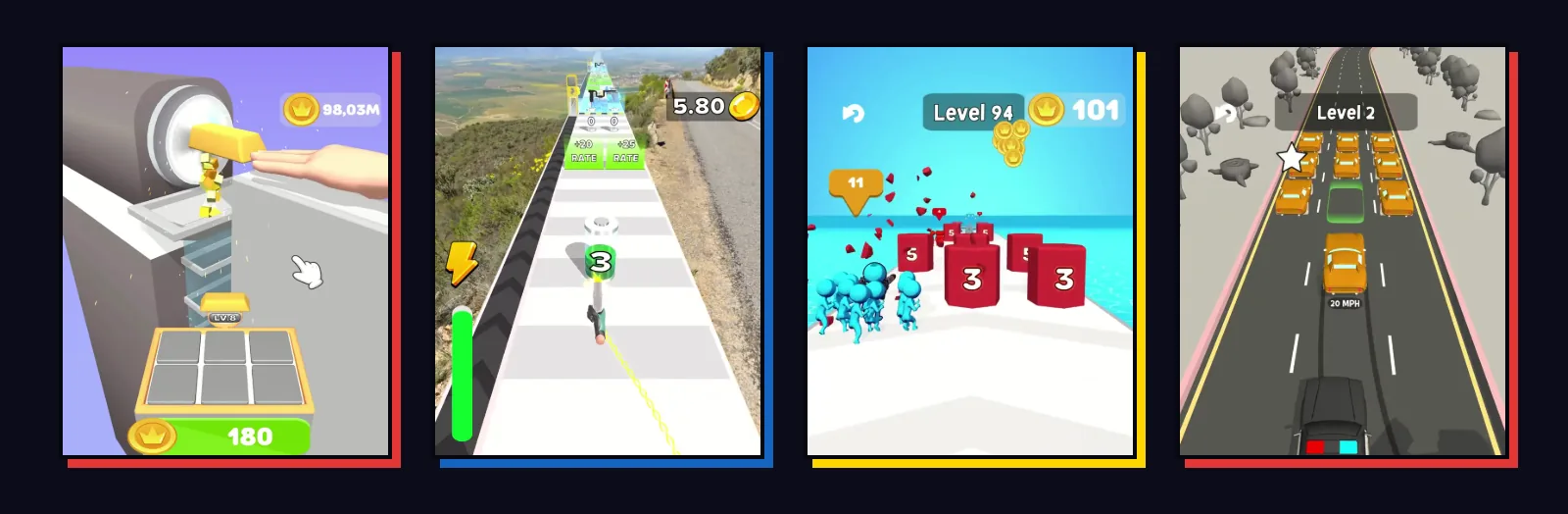
A foundation for testing fast
If more than one idea is tested every week, writing each prototype from scratch isn't possible. Almost every studio I worked at had a Unity framework: camera, controls, level flow, ad and analytics hooks came ready, and a new prototype only had to contain the idea itself. When we founded Grus Games, we built our own framework too. It raised both the quality and the speed of our prototypes.
What stayed with me
- Testing the first minute, not the idea. A prototype doesn't need menus, a shop or a long level structure. Enough game to show its best moment is enough.
- Writing down why an idea didn't work. Which number was bad, and why? Those notes shape the next idea.
- Reading the numbers together. A good CPI alone says little; it means something next to retention and playtime.
- Knowing when to stop. Dropping an idea after weeks of work is hard. But insisting on the wrong idea eats the time meant for the right one.
Most of these prototypes never showed up in any store. But I owe them the first question I ask today when I start a game: what does the first three seconds of this game show?